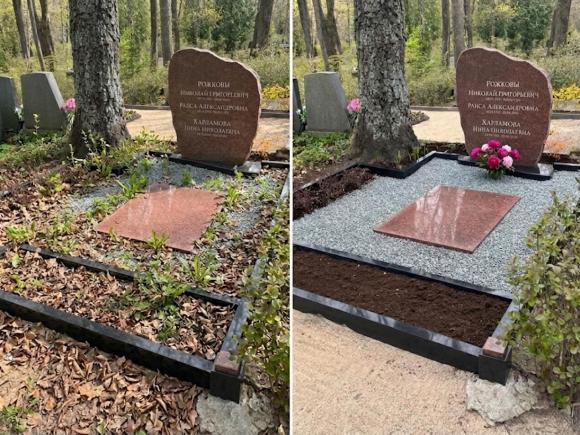
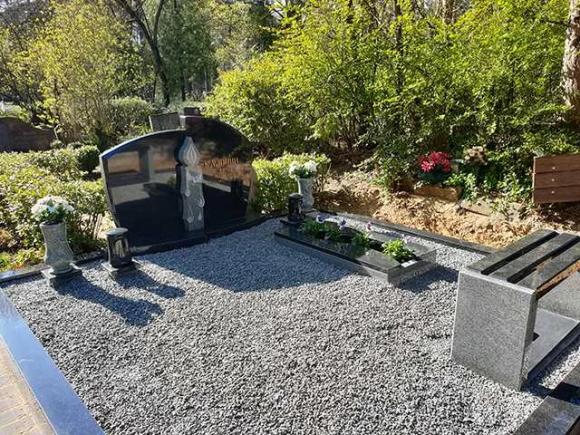
A monument of traditional classic shape with matching granite grave slabs and a border around the perimeter. Made from the Swedish granites Hallandia Gneis and Swedish Black, installed at Katlakalns Cemetery in July 2022.
How do you lay out a grave so that it looks well kept and tasteful and does not need complicated care? Almost everyone faces this question when they begin landscaping a grave. It is important not only to solve practical issues but also to create a thoughtful and aesthetic setting.
It is not always possible to visit the cemetery regularly, so mistakes in the design quickly become visible: complicated structures need extra care, and unnecessary details create visual clutter. A well-thought-out solution helps to avoid this and keeps the grave in order for longer without unnecessary effort.
The best solution is a design that looks aesthetic, stays in order over time and does not need constant attention.
This article looks at solutions that prove themselves in practice, explains why classic monuments are still in demand, and shows design options that make it possible to keep a grave tidy without unnecessary effort. You will learn what to pay attention to when choosing a monument and how to create a harmonious and lasting place of remembrance.
The traditional approach: a time-tested choice
Grave landscaping is not only a visual matter but also part of cultural and family traditions.
Over many generations, a particular approach to the design of graves has developed in Latvia - one based on restraint and naturalness. Overly bright or complicated solutions are used less often, and preference is given to calm classic designs.
That is why people most often choose:
- monuments of simple shape
- natural materials such as granite
- restrained compositions without unnecessary details
- a tidy and harmonious overall design
This approach helps to maintain a calm and orderly setting and ensures that the grave fits naturally into the overall landscape of the cemetery.
In addition, traditional solutions are also practical - they do not need complicated care, do not go out of date and are suitable for family graves.
That is why classic design is not simply a habitual choice but a considered solution that has proved itself over time.
Classic monument shapes
Simple-shaped monument with engraving

A classic two-part monument of simple rectangular shape, made from polished Swedish “Aurora” granite, with a candle motif and a portrait on glass. The whole grave is designed in a unified style with grave slabs and a granite border around the perimeter. Geotextile and decorative red-brown granite chippings have been laid over the plot. The whole grave ensemble was installed in summer 2022 at Bolderāja New Cemetery.
Grave landscaping is connected not only with visual design but also with cultural and family traditions.
Over generations, a restrained approach to the design of graves has developed in Latvia. It is based on naturalness and respect for the surroundings. Bright and complicated solutions are used less often - preference is given to calm classic designs.
In practice, this shows itself in a preference for:
- monuments of simple shape
- natural materials such as granite
- restrained compositions without unnecessary details
- a tidy and harmonious overall design
This approach preserves a calm atmosphere and allows the grave to fit naturally into the overall setting of the cemetery.
Traditional solutions are also practical - they do not need complicated care, keep their appearance over time and are suitable for family graves.
Here, classic design is not a formality but a considered choice based on experience and durability.
Why polished granite is chosen in Latvia
Scandinavian granite is mostly used for making monuments. In some cases, stone can also be supplied from Karelia or Ukraine. This material is well suited to Latvia's climate and is intended for long-term use.
Polished granite is resistant to moisture, frost and changes in temperature. It keeps its appearance for decades and does not need complicated care.
Polishing serves not only an aesthetic but also a protective purpose. A smooth surface collects less dirt, so care is simple and does not take much time.
It is usually enough to wash the monument once a year with warm water and wipe it with a soft cloth. This makes it a solution well suited to long-term use.
For a more detailed look at choosing materials for monuments, see the separate article on our blog.

Grave reconstruction - rebuilt with an easy-to-maintain traditional monument in polished black granite and a border around the perimeter. A path has been built around the grave, which helps to keep it in order. The plot is covered with granite chippings, with geotextile laid underneath to limit the growth of weeds.
Rock-faced monuments of simple shape
Naturalness and tradition

Rock-faced monument in Swedish AURORA granite
Rock-faced monuments hold a firm place among the most popular choices in Latvia, thanks to how close they look to the natural environment.
Such monuments:
- do not create visual clutter
- blend harmoniously into the surrounding landscape
- keep a natural appearance
- are more affordable
Their main feature is the combination of textured, split edges with worked and polished surfaces. This contrast creates a balance between natural form and precise, neat craftsmanship.
Composition and individual design options

Family grave landscaping at First Forest Cemetery in Swedish Kuru Gray granite
Rock-faced monuments are used not only as a stand-alone element but also as part of a composition. The structure may consist of two or three parts, depending on the concept and the requirements of the project.
This makes it possible to create family memorials, combining individual elements into a single architectural whole. Granite in different shades can be used, or a single colour range can be kept to.
Such monuments go well with fieldstone elements, making it possible to create expressive compositions while keeping a natural aesthetic.

Fieldstone as a design element in a grave layout
Caring for rock-faced monuments
Rock-faced monuments need more careful upkeep. Dirt builds up more quickly on the unworked areas, and the porous structure of the stone encourages moss to form.
Over time the edges can become overgrown and need to be cleaned periodically. At the same time, these changes are not seen as a flaw - they are part of the natural aesthetic, giving the monument extra character and expressiveness.
Grave design: less upkeep and a well-kept appearance
The way a grave is landscaped directly affects how it looks and how much care it needs. More and more often, people choose solutions that make it possible to keep the grave in order without regular involvement.
In practice, this means:
- laying geotextile to limit the growth of weeds
- covering the grave with chippings or pebbles so that it stays clean for longer
- partly or fully covering the surface with stone elements - granite slabs or paving
- planting undemanding plants that do not need regular care and keep the overall look lively
As a result, the grave stays tidy for longer and less time is needed to look after it.
If you are unable to do this yourselves, the care can be entrusted to specialists.
If you are unable to look after the grave regularly, this work can be entrusted to SoulGarden specialists. We provide both careful grave cleaning and restoration and renewal work, helping to keep the setting tidy and attractive in the long term. Contact us to find the most suitable solution for your situation.
Summary: how to landscape a grave without unnecessary complications
For a grave to look tidy and harmonious without needing constant care, it is enough to follow a few basic principles:
- choose a monument of simple, classic shape - it is a reliable and versatile solution
- give preference to high-quality polished granite, which suits the local climate
- design the grave in a unified style, avoiding unnecessary details
- use practical surfaces: chippings, pebbles, geotextile
- avoid complicated structures that need regular upkeep
- if necessary, bring in specialists so that everything is done properly from the start
This approach makes it possible to create a tidy and lasting place of remembrance that keeps its appearance for many years.
SoulGarden - help with grave landscaping
Every grave is individual - its location, condition, the family's wishes and the available budget all differ. It is important to take these aspects into account from the planning stage.
The SoulGarden team manages the project from the initial idea to full completion, offering solutions that combine aesthetics, practicality and durability. Our work is based on experience and an understanding of every stage of grave landscaping.
You can contact us about:
- choosing and making monuments - from classic to individual solutions
- complete landscaping of a grave
- reconstruction and renewal of graves
- professional cleaning and regular care
If necessary, our specialists will visit the site to assess the situation and offer the most suitable solution for your grave.
Contact us for a consultation and to choose a solution that will look well kept and last for many years.